
India’s EV charging market is projected to reach $10.6 billion by 2030, and the country needs 1.2 million charging points — but has fewer than 100,000 today. Becoming an EV charger distributor in India in 2026 means entering a high-growth market with massive supply-demand gaps. This guide covers everything: market data, investment requirements, licensing, site selection, and how to partner with Kiwi Technology as an exclusive distributor.
Introduction
India is in the middle of an electric vehicle revolution — and the infrastructure hasn’t caught up yet.
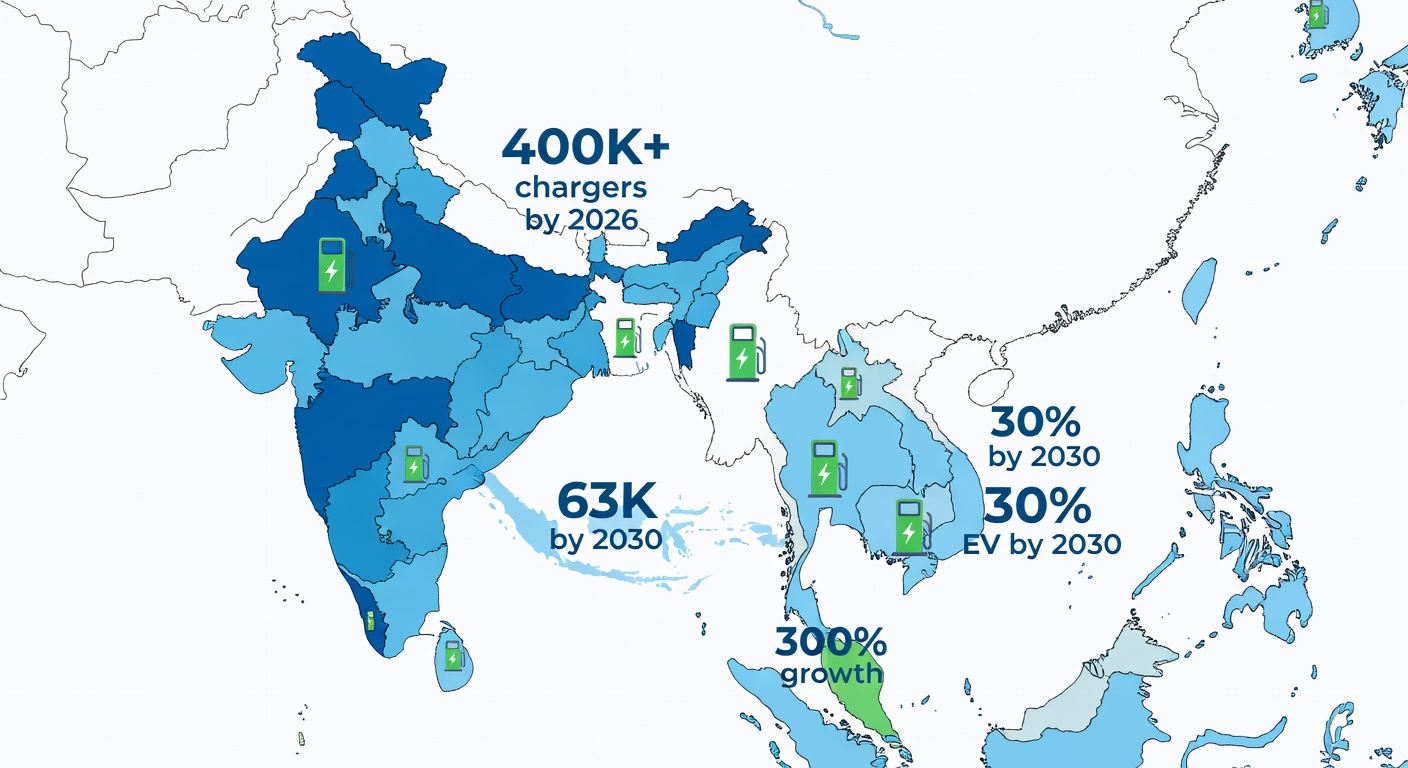
The numbers tell the story: India had approximately 3.4 million electric vehicles on the road as of early 2026, up from just 1.3 million in 2023. The government’s FAME III subsidy program is accelerating adoption. BYD, Tata, MG, and Hyundai are launching new EV models every quarter. State governments are mandating charging infrastructure in new commercial buildings.
But here’s the gap: India has fewer than 100,150 public charging stations against a need for 1.2 million by 2030 (Bureau of Energy Efficiency estimate). That’s a 92% shortfall. Someone needs to build those chargers — and that someone could be you.
This guide is for entrepreneurs, existing electrical equipment dealers, petrol pump operators, real estate developers, and anyone evaluating the EV charging distribution opportunity in India. We’ll walk through the market, the business model, the requirements, and how Kiwi Technology supports its distribution partners.
Related reading: Liquid-Cooled EV Charger India | EV Charging Solutions | About Kiwi Technology
The India EV Charging Market: By the Numbers
Market Size & Growth
| Metric | 2024 | 2026 (Est.) | 2030 (Proj.) |
|---|---|---|---|
| EV charging market size | $1.8 billion | $3.2 billion | $10.6 billion |
| Public charging stations | ~45,000 | ~100,000 | 1,200,000 (target) |
| EVs on road | 1.8 million | 3.4 million | 15-20 million |
| CAGR (market) | — | 33% | 27% |
| Government investment | ₹10,900 crore | ₹12,500 crore | ₹25,000 crore (planned) |
Key Growth Drivers
- FAME III subsidies — Up to ₹15,000/kWh for public charging infrastructure
- State-level mandates — Delhi, Maharashtra, Karnataka, and Tamil Nadu require charging stations in all new commercial developments
- Petrol pump diversification — Indian Oil, BPCL, and Hindustan Petroleum are adding EV charging to 22,000+ fuel stations
- Fleet electrification — BluSmart, Uber, and Zomato are electrifying delivery and ride-hailing fleets
- 800V vehicle adoption — Hyundai IONIQ 5/6, BYD Seal, and MG Windsor are driving demand for 150kW+ DC fast chargers
The Opportunity Gap
The most lucrative segments for new distributors:
| Segment | Current Supply | Demand by 2030 | Gap |
|---|---|---|---|
| Highway fast charging (150kW+) | ~2,500 stations | 50,000 | 95% |
| Urban commercial (60-120kW) | ~15,000 | 300,000 | 95% |
| Fleet depot charging | ~5,000 | 150,000 | 97% |
| Residential/commercial AC (7-22kW) | ~75,000 | 700,000 | 90% |
Step 1: Understand the Business Models
For reference: India’s PM E-DRIVE scheme guidelines are published by the Ministry of Heavy Industries. SE Asia market forecasts are available from IEA Global EV Outlook.
There are three primary ways to make money in EV charging distribution in India:
Model A: Equipment Distribution + Installation
What you do: Purchase chargers from a manufacturer (like Kiwi), sell them to end customers, and provide installation services.
| Parameter | Details |
|---|---|
| Investment | ₹25-50 lakh ($30,000-$60,000) startup |
| Revenue per unit | 15-25% margin on equipment + installation fees |
| Typical deal size | ₹5-15 lakh per project |
| Break-even | 8-12 months |
| Best for | Electrical contractors, equipment dealers |
Model B: Charging Network Operation
What you do: Install chargers at high-traffic locations and charge users per kWh consumed.
| Parameter | Details |
|---|---|
| Investment | ₹50 lakh – ₹2 crore ($60,000-$240,000) for 10-20 stations |
| Revenue | ₹15-25 per kWh (user pays) |
| Utilization needed | 15-20% for break-even |
| Payback period | 2-4 years |
| Best for | Real estate owners, petrol pump operators, fleet operators |
Model C: Exclusive Territory Distribution
What you do: Secure exclusive distribution rights for a region, build a dealer network, and earn margins on all sales in your territory.
| Parameter | Details |
|---|---|
| Investment | ₹1-3 crore ($120,000-$360,000) including inventory |
| Revenue | 20-35% margin on wholesale + dealer network commissions |
| Territory | State-level or zone-level exclusivity |
| Break-even | 12-18 months |
| Best for | Established distributors with B2B sales networks |
Kiwi Technology primarily partners with Model C distributors, with support for Model A and B partners on a case-by-case basis.
Step 2: Meet the Requirements
Legal Requirements
| Requirement | Details | Timeline |
|---|---|---|
| Business registration | Register as Pvt Ltd, LLP, or Partnership firm | 1-2 weeks |
| GST registration | Mandatory for equipment sales | 1 week |
| BIS certification | Chargers must comply with IS 17017 (Indian EV charging standard) | Manufacturer provides |
| Electrical contractor license | State-level license for installation work | 2-4 weeks |
| NOC from DISCOM | Distribution company approval for grid connection | 2-8 weeks |
| Fire safety clearance | Required for installations in commercial buildings | 1-2 weeks |
Technical Requirements
- Grid connection: Minimum 33kV connection for DC fast chargers (150kW+)
- Space: 200-400 sq ft per DC fast charging station (including vehicle bay)
- Internet connectivity: 4G/Ethernet for OCPP backend communication
- Earthing: Proper earthing as per IS 3043 (critical for safety)
Financial Requirements
| Cost Component | Range (₹) | Range (USD) |
|---|---|---|
| Initial inventory (5-10 units) | ₹25-60 lakh | $30,000-$72,000 |
| Office + warehouse setup | ₹5-15 lakh | $6,000-$18,000 |
| Installation equipment | ₹3-8 lakh | $3,600-$9,600 |
| Working capital (6 months) | ₹10-20 lakh | $12,000-$24,000 |
| Marketing + business development | ₹3-5 lakh | $3,600-$6,000 |
| Total startup investment | ₹46-108 lakh | $55,000-$130,000 |
Step 3: Choose the Right Product Mix
Not all chargers are equal — and the right product mix depends on your target customers. Here’s Kiwi’s recommended distributor product strategy for India:
Tier 1: Volume Drivers (60% of sales)
| Product | Target Customer | Why It Sells |
|---|---|---|
| DC 60-120kW Fast Charger | Petrol pumps, shopping malls, offices | Affordable, high demand, easy installation |
| AC 7-22kW Level 2 | Residential complexes, workplaces, hotels | Massive volume, low cost, essential for overnight charging |
Tier 2: Margin Drivers (30% of sales)
| Product | Target Customer | Why It Sells |
|---|---|---|
| DC 180-360kW Ultra Fast | Highway corridors, fleet depots | High margin, growing 800V vehicle demand |
| DC 20-40kW Wall Mount | Parking garages, commercial buildings | Compact, versatile, good margins |
Tier 3: Future-Proofing (10% of sales)
| Product | Target Customer | Why It Sells |
|---|---|---|
| DC 320kW+ Liquid-Cooled | Highway flagship stations, fleet hubs | Premium positioning, essential for tropical climates |
| V2G-enabled chargers | Commercial buildings, grid services | Emerging revenue stream |
Kiwi’s advantage: Our modular architecture means a single hardware platform covers 60-320kW with power module upgrades. Distributors stock one platform and configure per customer order — reducing inventory complexity.
Explore the full product range: KIWI EV Charging Solutions
Step 4: Select Your Territory
India is too large for a single distributor to cover effectively. Kiwi divides the market into zones:
North India Zone
- States: Delhi NCR, Uttar Pradesh, Rajasthan, Punjab, Haryana, Himachal Pradesh, Uttarakhand
- Key opportunity: Delhi government’s aggressive EV policy, NCR highway corridors, UP’s EV manufacturing hub
- Priority: High — Delhi mandates charging in all new buildings
South India Zone
- States: Karnataka, Tamil Nadu, Kerala, Andhra Pradesh, Telangana
- Key opportunity: Bangalore’s tech fleet electrification, Chennai’s automotive corridor, Kerala’s tourism EV fleet
- Priority: High — Karnataka and Tamil Nadu lead in EV adoption
West India Zone
- States: Maharashtra, Gujarat, Goa, Madhya Pradesh
- Key opportunity: Mumbai-Pune highway, Gujarat’s industrial fleet, Maharashtra’s EV policy
- Priority: High — Maharashtra has the highest EV registration in India
East India Zone
- States: West Bengal, Bihar, Odisha, Jharkhand, Northeast states
- Key opportunity: Early-mover advantage, less competition, government mining fleet electrification
- Priority: Medium — emerging market with lower current competition
Kiwi currently seeks exclusive distributors for all four zones. If you have an established sales network in any of these regions, contact us to discuss partnership terms.
Step 5: Apply for Government Subsidies
The Indian government offers significant subsidies that improve project economics for distributors and their customers:
Central Government (FAME III)
| Charger Type | Subsidy | Max per Station |
|---|---|---|
| DC Fast Charger (50kW+) | ₹15,000/kW | ₹7.5 lakh |
| DC Fast Charger (20-50kW) | ₹10,000/kW | ₹3 lakh |
| AC Charger (3.3-7.4kW) | ₹3,000/unit | ₹3,000 |
State Government Top-Ups
| State | Additional Subsidy | Land Support |
|---|---|---|
| Delhi | 50% of charger cost (max ₹1 lakh) | Government land at concessional rates |
| Karnataka | 25% capital subsidy | KIADB land allocation |
| Maharashtra | 25% capital subsidy (max ₹10 lakh) | MIDC land priority |
| Tamil Nadu | 20% capital subsidy | SIPCOT land allocation |
| Gujarat | ₹5 lakh per DC fast charger | GIDC land at subsidized rates |
Kiwi’s team helps distributors and their customers navigate the subsidy application process, including documentation, DISCOM coordination, and compliance with IS 17017 standards.
Step 6: Partner with Kiwi Technology
What Kiwi Provides to Distributors
| Support Area | What You Get |
|---|---|
| Exclusive territory rights | Protected geographic territory with no competing Kiwi distributors |
| Competitive pricing | Distributor pricing with 20-35% margins built in |
| Marketing support | Co-branded materials, digital marketing, trade show participation |
| Technical training | Product training, installation certification, troubleshooting support |
| Lead sharing | Inbound leads from Kiwi’s digital marketing shared with territory distributors |
| Demo units | Demo chargers at cost for customer demonstrations |
| OCPP backend | Cloud-based charger management platform included |
| Warranty support | 2-year standard warranty, extended warranty options |
| Customization | OEM/ODM services for customers with specific requirements |
The Partnership Process
- Initial discussion — Share your background, territory interest, and business plan
- Territory assessment — Kiwi evaluates market fit and existing partner coverage
- MOU signing — Memorandum of Understanding outlining territory, targets, and support
- Training — 5-day product and installation training at Kiwi’s Shenzhen facility (or remote)
- First order — Minimum initial order of 5 units to activate distributor status
- Launch — Joint marketing launch in your territory
Distributor Performance Tiers
| Tier | Annual Volume | Margin | Support Level |
|---|---|---|---|
| Authorized | 10-25 units | 20-25% | Standard |
| Silver | 26-75 units | 25-30% | Priority + marketing fund |
| Gold | 76-150 units | 30-35% | Dedicated account manager |
| Platinum | 150+ units | 35%+ | Strategic partner status |
Why Kiwi Technology for Your Distribution Partnership?
Kiwi Technology brings the exact capabilities the Indian EV charging market demands:
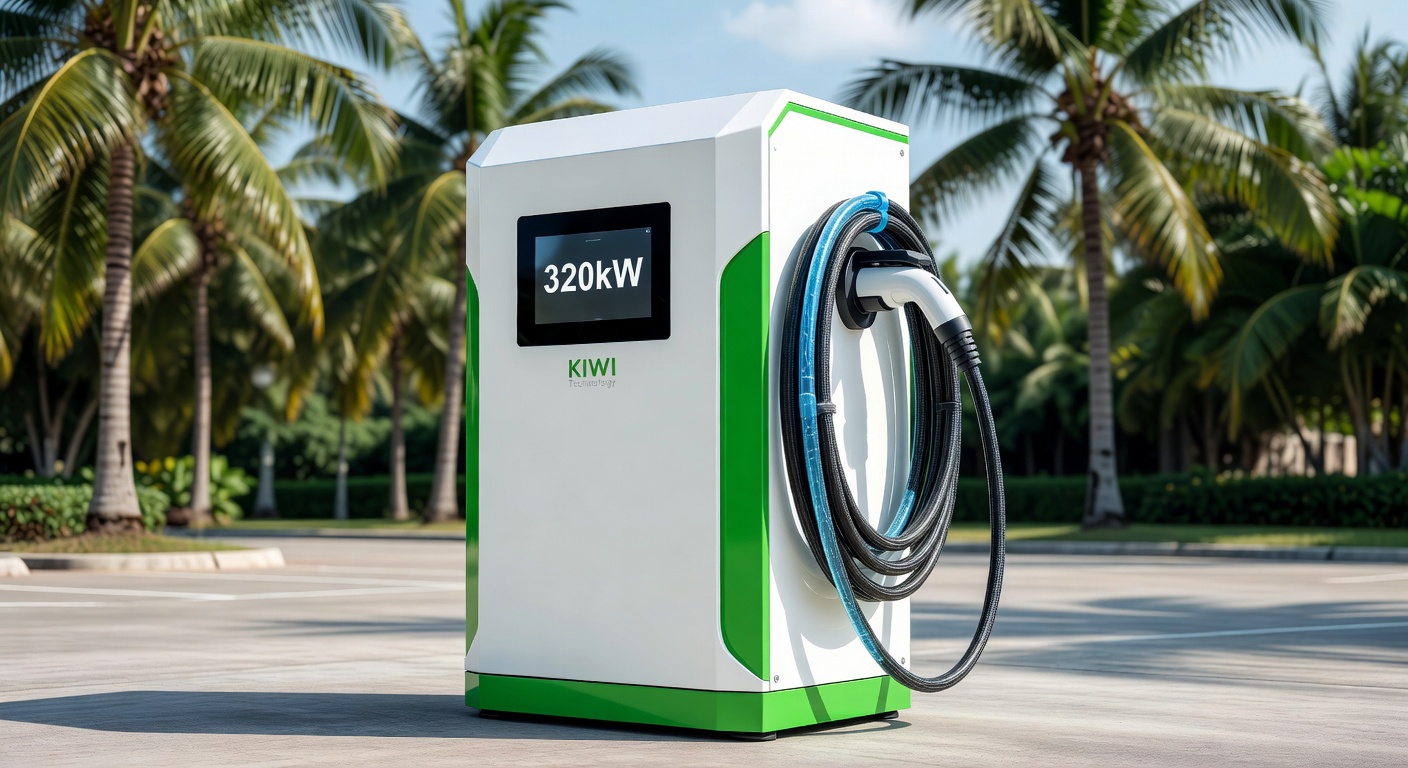
- Climate-optimized hardware: Our 320kW~1200KW Group Charging System with liquid-cooled cables is purpose-built for 45°C+ tropical climates. While competitors derate at high ambient temperatures, Kiwi chargers maintain full rated output.
- Modular architecture: One platform covers 60kW to 320kW, reducing your inventory complexity and letting you right-size each deployment without overcapitalizing.
- Comprehensive partner support: Training programs, technical documentation, marketing materials, lead sharing, and subsidy application assistance — we invest in your success.
- Proven technology: Our systems are deployed across 14+ markets with a track record of reliability in the demanding conditions where other chargers fail.
Learn more about Kiwi’s technology and partner program →
EV Charger Pricing in India: Product Comparison & Investment Guide
Below is our latest pricing quotation for the Indian market. All prices are in USD FOB (Free On Board) and include a 20% distributor margin. Actual landed costs in India may include applicable duties, GST (18%), and logistics. Contact our team at Kiwi Technology’s India desk for a precise landed-cost quotation for your territory.
Kiwi Technology India — Price Quotation (2026)
| Product | Model | Power Range | Price (USD FOB) | Best For |
|---|---|---|---|---|
| Group Charging System | K-GCS-320~1200 | 320KW – 1200KW | $28,800 – $96,000 | Highway corridors, fleet depots, high-traffic public charging hubs |
| Ultra Fast EV Charger | K-UFC-180~360 | 180KW – 360KW | $16,200 – $30,600 | Urban fast-charging stations, commercial fleets, highway rest stops |
| Fast EV Charger | K-FC-60~160 | 60KW – 160KW | $6,600 – $16,000 | Shopping malls, hotels, office parking, fleet bases |
| DC Wall Mounted Charger | K-WMC-20~40 | 20KW – 40KW | $2,800 – $5,200 | Apartment complexes, small commercial, rural charging points |
| AC Level 2 Charger | K-AC-7~22 | 7KW – 22KW | $560 – $1,760 | Residential, workplace, hotel slow charging |
Note: Prices shown include a 20% margin for distributors. Minimum order quantities may apply. All pricing is indicative and subject to change based on order volume, certification requirements, and shipping terms. Request a formal quotation →
Price Comparison: Kiwi Technology vs Market Alternatives
When comparing Kiwi Technology’s pricing against other DC fast charger suppliers in India, several factors make our offering particularly competitive for distributors:
| Factor | Kiwi Technology | Market Average | Distributor Advantage |
|---|---|---|---|
| 60KW fast charger (FOB) | $6,600 | $8,500 – $12,000 | 22–45% lower entry cost |
| 320KW group system (FOB) | $28,800 | $40,000 – $55,000 | 28–48% cost advantage |
| Liquid-cooled cable | Standard on 180KW+ models | $3,000 – $5,000 add-on | Included at no extra cost |
| Warranty | 5 years | 2–3 years | 50% longer coverage |
| OCPP 2.0.1 compliance | Standard | Often extra license fee | No recurring licensing |
This pricing structure makes Kiwi Technology one of the most compelling options for Indian distributors looking for premium-quality DC fast chargers without the premium price tag. The combination of liquid cooling, modular architecture, and competitive pricing gives distributors a clear advantage when pitching to fleet operators, property developers, and government projects.
Explore our full range of charging solutions → | Learn about the benefits of DC fast charging for your customers →
What This Means for Partners
For entrepreneurs and businesses evaluating the EV charger distribution opportunity in India, several key takeaways are worth internalizing:
- The timing is right: India’s 49% EV market CAGR, combined with government mandates for 400,000+ public chargers, creates a distribution opportunity that won’t wait. Early entrants in each territory will build defensible market positions.
- Choose your cooling strategy wisely: The distributor who deploys liquid-cooled chargers for highway and urban high-amp applications will outperform one who specs air-cooled units that throttle in Indian summers. Your product choice is your reputation.
- Subsidies make the business case: PM E-DRIVE capital subsidies of 30-50% directly improve your customers’ ROI. Learn how to navigate these — Kiwi provides documentation and application support.
- Start focused, scale methodically: Our most successful partners begin with one state or a focused region, perfect their installation and service model, then expand. The modular product platform supports this phased approach.
Ready to discuss? Contact Kiwi’s partnership team for a confidential discussion about your market.
Frequently Asked Questions
How much does it cost to become an EV charger distributor in India?
The total startup investment ranges from ₹46 lakh to ₹1.08 crore ($55,000-$130,000), depending on your territory, inventory level, and whether you plan to also operate charging stations. This includes initial inventory, office setup, installation equipment, working capital, and marketing. Kiwi offers flexible initial order requirements to help new distributors get started.
Do I need technical experience to become an EV charger distributor?
Technical experience is helpful but not mandatory. Kiwi provides comprehensive product and installation training to all distributor partners. Many successful distributors come from electrical equipment, telecom infrastructure, or general distribution backgrounds. What matters most is a strong B2B sales network and the ability to build relationships with real estate developers, fleet operators, and government agencies.
What is the profit margin for EV charger distribution in India?
Distributor margins range from 20-35% on equipment sales, depending on volume tier and product category. DC fast chargers (150kW+) typically carry higher margins (25-35%) than AC chargers (15-20%). Additional revenue comes from installation services (15-25% of project value), annual maintenance contracts (₹15,000-50,000 per charger per year), and software subscriptions.
How long does it take to break even as an EV charger distributor?
Most Kiwi distributors reach break-even within 12-18 months, assuming active business development. The key variables are: territory size and EV adoption rate, your existing customer network, government subsidy availability, and how quickly you can close the first 10-20 installations.
What certifications do EV chargers need in India?
EV chargers sold in India must comply with IS 17017 (the Indian EV charging standard, based on IEC 61851). Kiwi’s chargers come pre-certified with BIS (Bureau of Indian Standards) compliance. For installation, you need a state electrical contractor license and NOC from the local DISCOM (distribution company). Kiwi provides all certification documentation to support your sales process.
Can I be a distributor for multiple states?
Yes, Kiwi offers both state-level and zone-level (multi-state) distribution rights. Zone-level exclusivity requires higher volume commitments but offers greater long-term value. We recommend starting with one state or a focused region, then expanding as you build market presence.
What makes Kiwi different from other EV charger manufacturers?
Three things set Kiwi apart for Indian distributors: (1) Liquid-cooled technology purpose-built for tropical climates — critical for reliable operation in 45°C+ Indian summers; (2) Modular architecture (60-320kW on one platform) that reduces your inventory complexity; and (3) Comprehensive distributor support including training, marketing, lead sharing, and subsidy application assistance. Learn more about Kiwi Technology.
References & Further Reading
Data and context sourced from:
- Electrek
- Charged EVs
- ScienceDirect
- IEA Global EV Outlook
- PatSnap
- ABB EV Charging
- SK Signet
- Hanon Systems
- BYD
- Artecona
- Fraunhofer IZM
- CNEV Post
Conclusion
The EV charging distribution opportunity in India is real, large, and time-sensitive. The window for securing exclusive territory rights, building customer relationships, and establishing installation expertise is now — before the market matures and competition intensifies.
Kiwi Technology is looking for serious, capable partners who want to build a long-term business in EV infrastructure. We provide the products, training, and support. You bring the local market knowledge, customer network, and entrepreneurial drive.
Ready to explore a Kiwi distribution partnership? Contact our partnership team to discuss territory availability and next steps.